How We Build a Cold Email System From LinkedIn Leads
How we turn LinkedIn Sales Navigator searches and post engagement into verified lead lists, plus the inbox setup that keeps cold email out of spam.

By Daniel Matias, Founder, Deep Loom
· Updated · 7 min read
Short answer
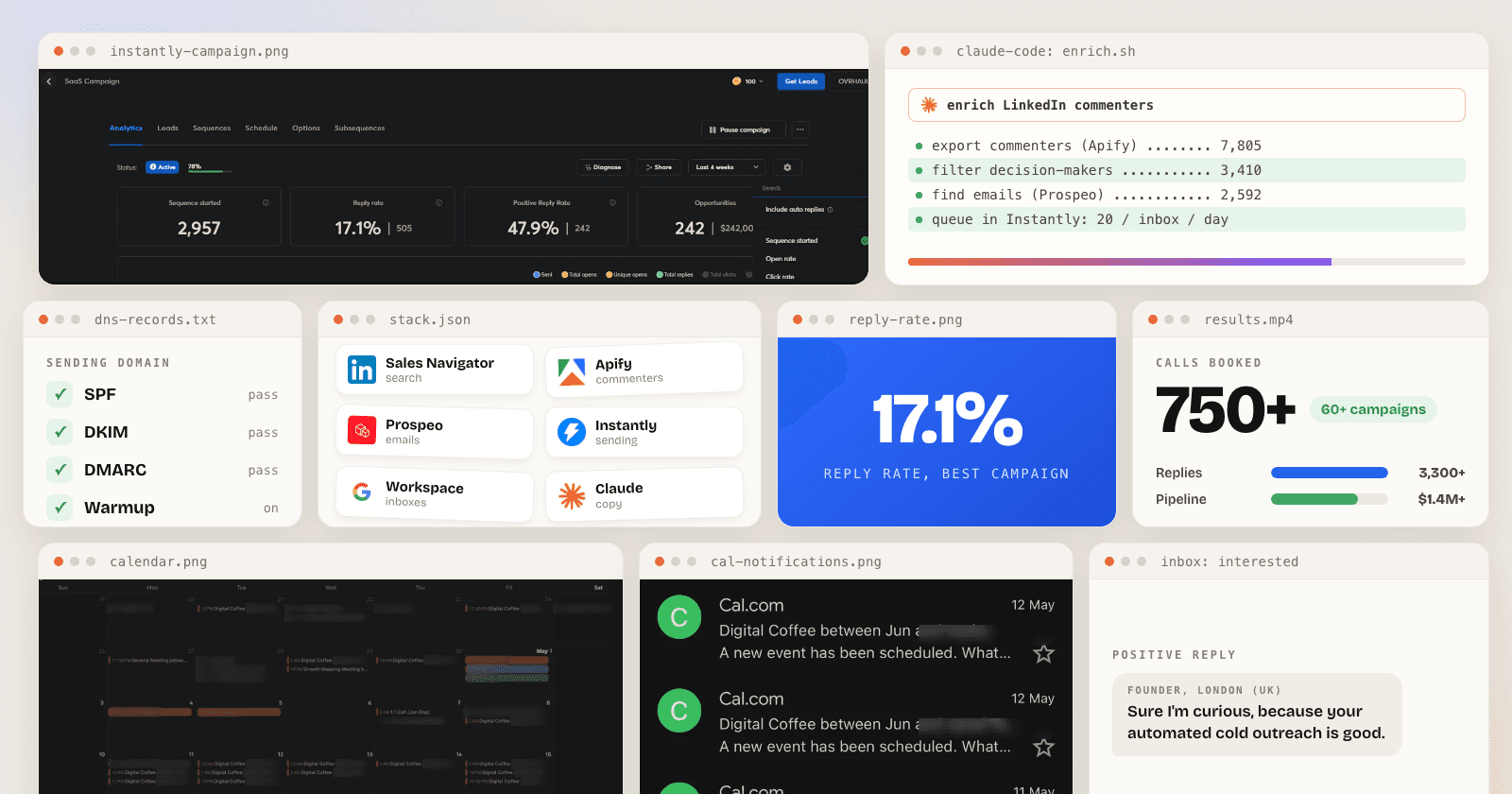
We source leads from LinkedIn in two ways: a Sales Navigator search exported with a scraping tool, and the people who comment on posts about the problem we solve. We filter for decision-makers before paying to find any email, verify every address, then send short, specific emails from warmed secondary domains at 20 emails per inbox per day.
Key takeaways
- Filter before you enrich. Paying to find emails for people you would never contact is the most common waste in outbound.
- LinkedIn engagement is a buying signal. Someone who commented on a post about your problem is warmer than a cold title match.
- Deliverability is infrastructure: secondary domains, 2 to 3 inboxes per domain, 2 to 3 weeks of warmup, and no tracking.
- Short beats clever. Our emails stay under 100 words with one proof point and one question.
- Every campaign is created paused, and nothing sends until a person has read the copy.
What is a LinkedIn-sourced cold email system?
A LinkedIn-sourced cold email system is a repeatable pipeline that turns LinkedIn data into email campaigns: find the right people, filter them, find and verify a work email, write a personal first line, send from protected inboxes, and review every campaign before it goes live.
We start from LinkedIn because it is the most up-to-date record of who holds which job. Titles, seniority, company size, industry and location are all there, and they change the week someone changes roles. A bought list is often months behind.
The difference between a list and a system is that a system runs again next week without rebuilding anything. These are the stages we run for every campaign:
| Stage | What happens | Tools we use |
|---|---|---|
| Source | A Sales Navigator search or post commenters are exported | LinkedIn Sales Navigator, Vayne, Apify |
| Filter | Decision-makers in target countries only, deduplicated | Rule-based filters, manual review |
| Enrich | Find and verify a work email for each person who passed | Anymailfinder, Prospeo |
| Write | A personal first line plus a short sequence | Claude for drafts, a person for review |
| Send | Plain-text email from warmed secondary domains | Instantly, Google Workspace inboxes |
| Review | Campaign stays paused until copy and inboxes are checked | A person, every time |
How do you pull leads from LinkedIn?
We use two LinkedIn sources, plus a B2B database for niches where LinkedIn search is thin. Each campaign picks the one that fits the offer.
- 01Sales Navigator search
Build the search inside Sales Navigator: title, seniority, headcount band, industry and geography. A tool like Vayne exports the results to a CSV through a connected Sales Navigator seat. Each row carries the name, title, company, website, headcount, industry, location and LinkedIn URL.
- 02Post commenters
Find recent posts about the problem you solve and export the people who commented. A comment is a public hand-raise: that person spent time on exactly your topic this week. With Apify, exporting 1,500 comments costs about $3.
- 03B2B database
For niches like ecommerce, filter a database by technology (for example, stores running Shopify), revenue band and headcount. Prospeo does this without a Sales Navigator seat, and returns LinkedIn-derived profiles with verified emails.
From one round of 19 popular posts about AI and go-to-market, commenter exports gave us 7,805 unique people. After filtering, 3,410 were decision-makers in our target countries.
Why should you filter leads before finding emails?
Email finders charge for every address they return. If you enrich first and filter later, you pay to find emails for students, assistants and companies outside your market. So we filter first, on data we already have for free:
- Decision-maker titles only, matched across languages: founder, CEO, owner, head of, director, and their German, French, Spanish, Dutch and Nordic equivalents.
- Target countries only. We keep an allowlist of about 45 countries.
- Exclusions for students, interns, assistants and profiles marked open to work.
- Two people per company at most, so one account never gets five emails in the same week.
- Deduplication against every list we have run before.
Only then do we look up emails. Anymailfinder goes first, Prospeo catches the misses, and we keep only addresses marked valid. Results are cached, so a rerun never pays twice for the same person.
How do you keep cold email out of spam?
A great list sent from a damaged inbox goes nowhere. Deliverability is infrastructure, and it is set up before the first lead is exported. Google requires authenticated sending for anyone emailing Gmail users at volume, so authentication is the floor, not a bonus.
| Setting | What we do | Why |
|---|---|---|
| Domains | Separate lookalike domains, never the main one | A burned sending domain cannot touch your real email |
| Inboxes | 2 to 3 per domain, never more than 3 | Spreads volume so no single domain looks like a bulk sender |
| Authentication | SPF, DKIM and DMARC on every domain | Unauthenticated mail is filtered or rejected |
| Warmup | 2 to 3 weeks before the first send | New inboxes need a sending history first |
| Volume | 20 emails per inbox per day | Stays below the 25 most providers allow |
| Format | Plain text, open and link tracking off | Tracking pixels and redirect links are spam signals |
| Bounces | Under 2%, pause the campaign above 3% | High bounce rates damage sender reputation |
Sizing follows from those numbers. To reach 5,000 new people a month with a 3-email sequence, you need about 36 inboxes across 12 domains.
What should a cold email actually say?
Our emails stay under 100 words. Each one follows the same four beats:
- 01A specific observation about the person. For commenters, it is what they said on the post.
- 02The gap: what their situation means they will need next.
- 03One proof point with a number, linked to the case study it came from.
- 04One question: Is this something worth discussing?
The first line reads like a note, not a template. It stays under 20 words and is built on the rarest detail on their profile. Common achievements get skipped, because everyone else is already mentioning them.
The sequence is 3 to 4 emails a few days apart: the opener, a short bump, a low-effort offer such as a recorded breakdown, and a final nudge. Every lead carries a tag for its source, so reply rates can be compared by segment or by post.
What results does this produce?
Across 60+ campaigns built and run with our partner Qwickstep:
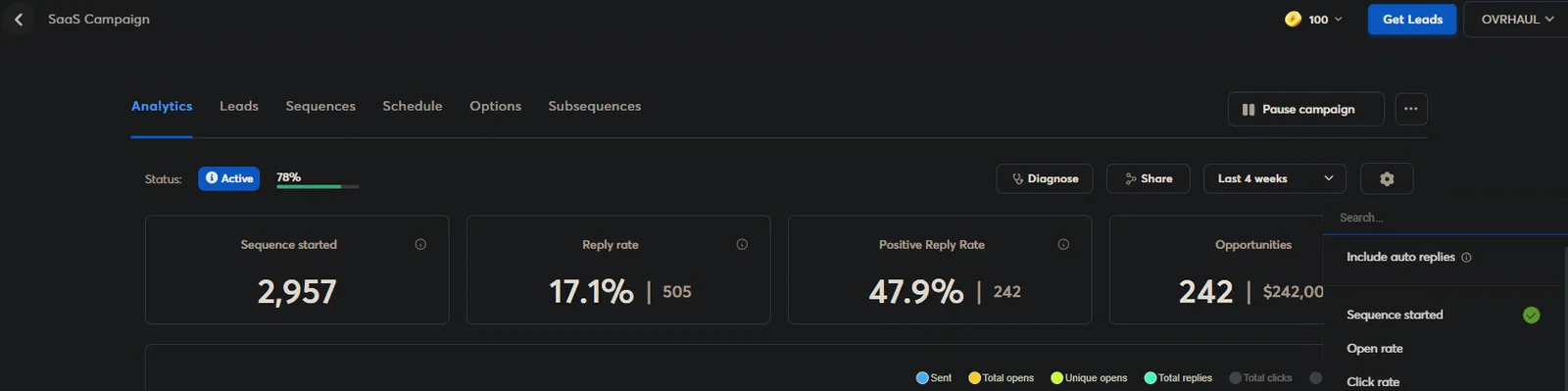
Reply rates across our campaigns range from about 3% to 17%. The best performers were narrow: one niche, one offer, one sequence. The full breakdown is in our cold email case study.
The same signal-first approach works for founders with an audience. For AI founder and YouTuber Ty Chen, a signal-based system and a LinkedIn content strategy now book qualified calls every week, up to 10 in his best week. See Ty Chen's case study and video.

Frequently asked questions
Is it legal to scrape LinkedIn for cold email?+
Exporting LinkedIn data with third-party tools sits in a gray area of LinkedIn's terms, and in the EU and UK, cold B2B email has to rest on legitimate interest. We email business addresses only, keep every message relevant to the person's role, and make opting out easy. Check the rules for each country you send to.
How many cold emails can one inbox send per day?+
We send 20 per inbox per day. Most providers allow around 25, and staying below that ceiling protects the inbox's reputation.
How long does it take to set up a cold email system?+
About 2 to 3 weeks, mostly spent warming up new inboxes. List building happens at the same time, so the first emails can go out as soon as warmup ends.
What is a good reply rate for cold email?+
Across our campaigns, reply rates range from about 3% to 17%. The highest come from narrow lists with one offer and one sequence.
Do you need LinkedIn Sales Navigator?+
Only for the search route: tools like Vayne export from your own Sales Navigator seat, which costs about $120 a month. Post commenters and B2B databases like Prospeo do not need a seat.
Should you track opens in cold email?+
We turn open and link tracking off. Tracking pixels and redirect links add spam signals, and open rates have become unreliable since mail apps began loading images automatically.
Sources

About the author
Daniel Matias, Founder, Deep Loom
Daniel builds the go-to-market and automation systems Deep Loom runs for B2B founders: cold email, founder-led LinkedIn, and the AI agents behind them. 100+ systems shipped since 2020.
Keep reading